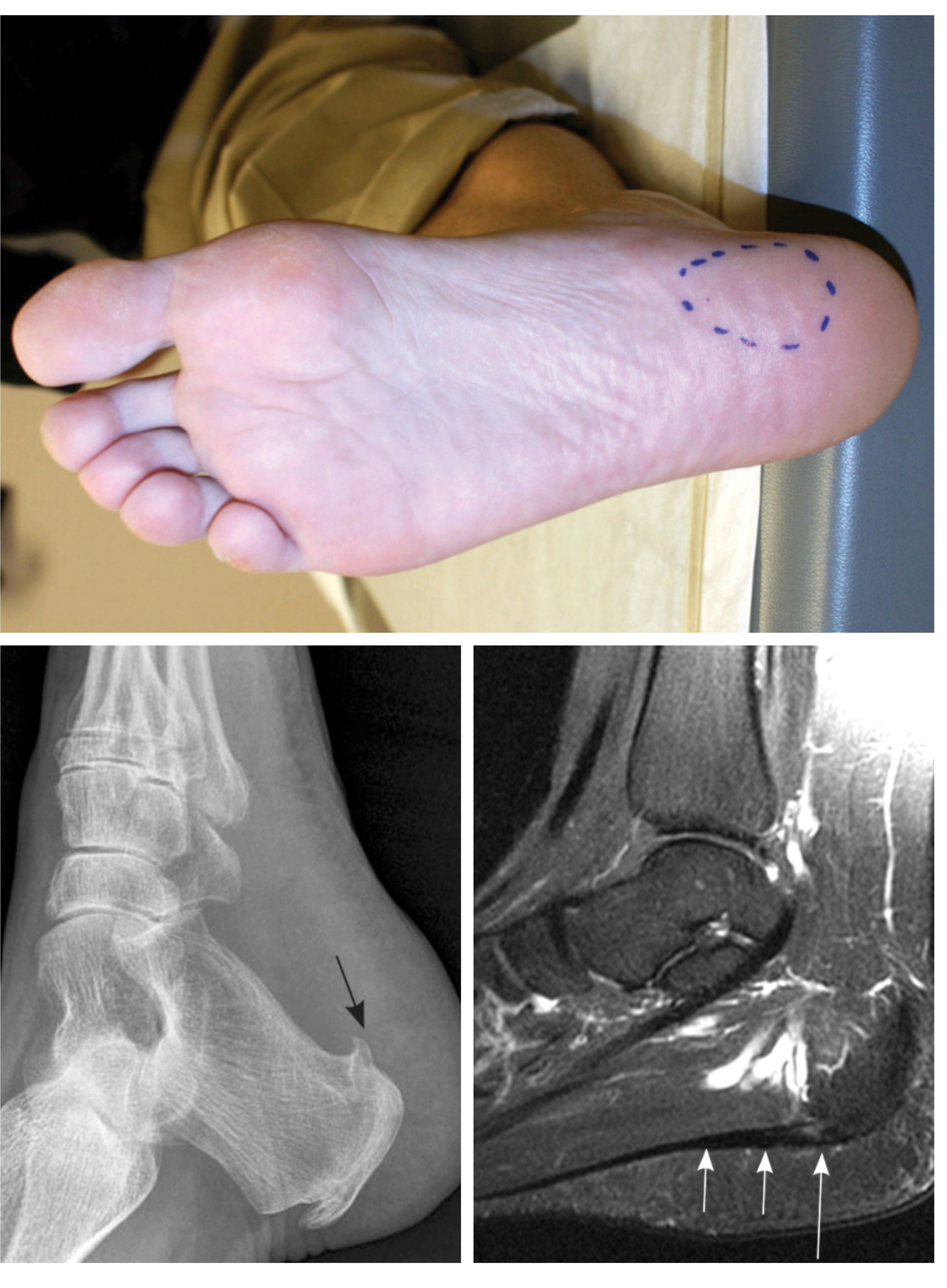
Diagnosis and treatment of plantar fasciitis .
What is planter fasciitis?
Planter fasciitis is a common cause of hill pain in adults.
It affects sedentary as well as athletic populations.
Obesity, excessive foot pronatiin, flat foot, excessive running and prolonged standing are risk factors for developing plantar fasciitis.
Patient may present with heel pain with their first steps in the morning or after prolonged sitting and sharp pain with pressing the medial heel region.
Discomfort in the heel can be experienced by passive ankle or first toe dorsiflexion.
Diagnostic imaging like x-ray may show a bony spur at plantar aspect of heel bone.
Other diagnostic imaging like ultrasonography and MRI are reserved for recalcitrant cases or to rule out other heel pathology. It will show increased plantar fascial thickness and abnormal tissue signal at the attachment of plantar facia over calcaneum.
Treatment of plantar fasciitis:
conservative treatments help with the disabling pain.
Initially treatments consist of rest, activity modification, ice massage, oral analgesics and stretching exercises for 2 to 3 weeks.
If heel pain persists, then treatments such as physical therapy modalities, foot orthotics and corticosteroid injections should be considered.
90% of patients will improve with these conservative techniques.
Patients with chronic recalcitrant plantar fasciitis lasting 3 months or longer, can consider a small procedure to release plantar fascia called plantar fasciotomy which can be done through a very small sutureless incision.